
Ghatkopar, Mumbai
(+91) 9969026600
(+91) 9372887736
furiaeye@gmail.com
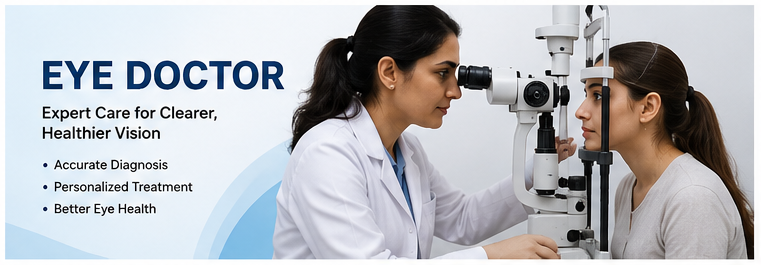
Finding a doctor you can trust with your vision is one of the most important healthcare decisions you can make. Dr. Bhavesh Furia has earned a reputation as the Best Eye Doctor in Ghatkopar, bringing more than 20 years of dedicated experience to every consultation, diagnosis, and treatment he provides.
Two Decades of Dedicated Service
Since establishing the clinic in 2001, Dr. Furia has treated thousands of patients across Ghatkopar, building a practice grounded in clinical excellence and genuine compassion. His meticulous approach to diagnosis, combined with a calm and reassuring bedside manner, has made him a trusted name among families seeking the best eye doctor in Ghatkopar for both routine and complex eye conditions.
A Doctor Who Listens
What distinguishes a great doctor from an average one is often not just technical skill, but the willingness to listen carefully to a patient's concerns. Every consultation begins with a thorough discussion of symptoms, medical history, and lifestyle factors that may be affecting eye health. This detailed, patient-centered approach ensures that no detail is overlooked, allowing for precise and personalized treatment recommendations. You can read more about his background and philosophy of care on our about the doctor page.
Expertise Across Multiple Eye Conditions
Patients seeking the best eye doctor in Ghatkopar often have varied needs — from cataracts and glaucoma to refractive errors and retinal issues. Dr. Furia's broad expertise allows him to manage this full spectrum of conditions under one roof. He is skilled in performing stitchless cataract surgery, guiding patients through LASIK surgery for vision correction, and managing complex retinal conditions through retinal laser and injection surgery.
This versatility means patients do not need to be referred elsewhere for specialized care, allowing for a smoother, more coordinated treatment journey from diagnosis through recovery.
Combining Experience with Modern Technology
While experience is invaluable, Dr. Furia also ensures his practice stays current with advancements in ophthalmic diagnostics and surgical techniques. This blend of long-standing clinical wisdom and modern technology allows for more accurate diagnoses and better surgical outcomes, a combination that patients consistently highlight when describing why they consider him the best eye doctor in Ghatkopar.
Compassionate, Patient-First Philosophy
Beyond clinical skill, what patients often remember most is how they were treated during a vulnerable moment — facing an eye condition that may affect their daily life or independence. Dr. Furia's compassionate approach ensures patients feel heard, informed, and supported at every stage of their treatment, whether they are undergoing a routine check-up or preparing for surgery.
This human-centered approach to medicine, paired with technical excellence, has helped establish long-term trust with patients who return not just for themselves, but bring family members and friends as well, further cementing his standing as the best eye doctor in Ghatkopar.
Schedule a Consultation
If you are searching for an eye doctor who combines experience, compassion, and modern medical expertise, we invite you to experience the difference for yourself. Get in touch through our contact page to book an appointment and begin your journey toward better eye health with a doctor patients across Ghatkopar have trusted for over two decades.
Frequently Asked Questions
Stitchless Cataract Surgery (Phacoemulsification) & Lens Implantation
What is Phacoemulsification?
Phacoemulsification is a modern, stitchless cataract surgery technique in which the cloudy natural lens is broken down using ultrasonic energy and removed through a tiny incision, followed by implantation of an artificial intraocular lens (IOL).
Is stitchless cataract surgery painful?
No, the procedure is performed under local anesthesia and is virtually painless. Most patients experience only mild discomfort, and normal activities can usually be resumed within a few days.
How long does recovery take after lens implantation?
Since no stitches are required, recovery is quick. Most patients notice improved vision within 24–48 hours, with complete healing typically within a few weeks.
Lasik Surgery for Refractive Error (Glasses)
Who is a good candidate for LASIK surgery?
Adults above 18 years with stable refractive error, adequate corneal thickness, and no active eye disease are generally good candidates. A detailed pre-surgical evaluation determines final eligibility.
Can LASIK completely remove my dependence on glasses?
For most patients, LASIK significantly reduces or eliminates the need for glasses for distance vision. Some patients may still need reading glasses later due to natural age-related changes.
Is LASIK surgery permanent?
Yes, LASIK provides a permanent correction to the treated refractive error, although natural age-related vision changes such as presbyopia may still occur over time.
Topography & Pachymetry for Corneal Evaluation
What is corneal topography used for?
Corneal topography creates a detailed map of the cornea's surface curvature, helping detect irregularities such as astigmatism or early keratoconus before planning any vision correction surgery.
Why is pachymetry important before LASIK?
Pachymetry measures corneal thickness, which is essential to confirm that the cornea has sufficient tissue to safely undergo LASIK or other refractive procedures.
Is corneal evaluation painful or time-consuming?
No, both topography and pachymetry are quick, painless, non-invasive tests that take only a few minutes and require no injections or incisions.
Retinal Laser, Injection & Surgery
When is retinal laser treatment recommended?
Retinal laser treatment is commonly recommended for conditions like diabetic retinopathy, retinal tears, and certain vascular disorders to prevent further vision loss.
What are retinal injections used for?
Retinal injections, such as anti-VEGF therapy, are used to treat conditions like macular degeneration and diabetic macular edema by reducing abnormal blood vessel growth and swelling.
Is retinal surgery a major procedure?
Retinal surgeries range from minor laser procedures to more involved surgical interventions, depending on the condition. Our team evaluates each case individually to recommend the safest, most effective option.
Pediatric Evaluation & Squint Surgery
At what age should a child's first eye exam be done?
Children should ideally have their first comprehensive eye exam by age 3-4, or earlier if any signs of squint, poor focus, or unusual eye movement are noticed.
Can squint be corrected without surgery?
Mild cases of squint may be managed with glasses, eye patches, or vision therapy. However, moderate to severe cases often require squint surgery for proper alignment.
Is squint surgery safe for children?
Yes, squint surgery is a well-established and safe procedure performed routinely in pediatric ophthalmology, with high success rates in improving eye alignment.
Glaucoma Care & Surgery
What are the early warning signs of glaucoma?
Glaucoma often has no early symptoms, which is why it's called the "silent thief of sight." Regular eye pressure checks and routine exams are essential for early detection.
Can glaucoma be cured completely?
Glaucoma cannot be cured, but it can be effectively managed with medication, laser treatment, or surgery to control eye pressure and prevent further optic nerve damage.
When is glaucoma surgery necessary?
Surgery is usually recommended when medications or laser treatments fail to adequately control eye pressure, or when the condition is progressing despite treatment.
Facilities Available

FURIA'S EYE CLINIC
FURIA'S EYE CLINIC is dedicated to providing comprehensive, compassionate, and advanced eye care for patients of all ages. With a commitment to excellence, our experienced ophthalmologists combine clinical expertise with modern diagnostic technology to deliver accurate diagnoses and effective treatments for a wide range of eye conditions.
call now
+91 9969026600
+91 9372887736
Facilities Available
- Stitchless Cataract Surgery (Phacoemulsification) & Lens Implantation
- Lasik Surgery for Refractive Error (Glasses)
- OCT (High Definition Retinal & Optic Nerve Scan)
- Topography & Pachymetry for Corneal Evaluation
- Retinal Laser, Injection & Surgery
- Pediatric Evaluation & Squint Surgery
- Cosmetic Eye Surgery
- Glaucoma Care & Surgery
- Perimetry
- Yag Laser
Contact Details
copyright © 2026 Furias Eye Clinic. all right reserved.